Unpopular opinion: fluff is not pointless. Nor does it make a story uninteresting, unbelievable, or unrealistic. Likewise, angst is not the devil, but it’s also not necessary to make a story worthwhile or interesting.
Plot is driven by characters. Characters are driven by conflict. Conflict =/= angst.
Don’t make writers feel bad because they write angst into their stories, and don’t make writers who stick to fluff feel like their stories aren’t interesting or as worthwhile because they lack a heap of angst.
Guys, I–*tears up*–thank you all SO much! I honestly can’t say it enough! I’m so grateful for each and every one of you, your support just warms my heart.
So, with the gushing out of the way, here are the guidelines for the drabble request event thingy (I can’t do names). I’ll post the prompts later today (I’m just finishing up the list), and I’ll reblog this post again with the link to that. After that, feel free to send in your requests through my ask box!
SO.
Things I’ll write:
Anything from the four main Undertale AUs (So Undertale, Underswap, Underfell, and Swapfell). I’m only a little bit familiar with Horrortale and Fellswap, so feel free to request them, but I can’t guarantee my characterisation will be accurate!
I’ll write basically any ship, the only thing I’m not really comfortable with is incest (so Fellcest, Swapcest etc.). I’m happy to write them platonically, but I’d rather not do anything romantic between siblings or family members.
If you want me to write a ship platonically, please specify so that I know, otherwise I’ll assume you want it as a romantic ship (or, y’know, a “lots of raw sexual tension” kind of ship).
On the note of raw sexual tension, if you’d like me to do something NSFW, please specify, but I think I’ll stick to only mild NSFW this time around (so, no higher than an M rating). I’m not quite confident enough in my smut writing abilities yet to do drabbles for it, but I might consider it for another time!
If there are any other extra details you want me to include beyond the prompts, please let me know what they are! (e.g. angst, fluff, on the Surface, any kind of AUs (college, detective, medieval, whatnot), etc.)
Things I won’t write:
Underage/Aged up ships.
Incest (siblings or other family members).
That’s pretty much it ship wise – other than that, go nuts! I’m a sucker for rarepairs.
I’m not going to do anything particularly NSFW for this milestone, so kinks and all that stuff are off the table. Most of the prompts are pretty tame, and are more oriented around humour (although some many are suggestive) so I don’t think there’s too much room for particularly NSFW or triggering stuff.
I will say though, I’m most familiar with the skeletons, and I tend to lean towards ships involving Papyrus. But I’m still very happy to include other Undertale characters! I just might not be as good at representing them (sorry!)
Also – if there’s anything specific you want me to exclude (i.e. potentially triggering things) please let me know what they are! The last thing I want to do is ruin someone’s request by putting in stuff that makes them uncomfortable.
I can’t think of much else that needs to be said. If I think of anything I need to add, I’ll make another post. And if you’re confused by anything, please feel free to drop me an ask!
I’ll just say one last thank you to all of you! I’m so overwhelmed by your kindness and support, it genuinely means the world to me. I’m really looking forward to this, so I hope you all enjoy it too!
Hello everyone! Now that I’ve finished with Sixteen Rules, I wanted to celebrate (almost!) reaching 100 followers by having a small drabble prompt… thingy (I actually don’t know what people call these). I’m so grateful to everyone who supported me throughout the writing of Sixteen Rules, and to all of you for motivating me with my writing in general! I really appreciate you all so much, so I wanted to do a drabble request event (that’s probably a better word than thingy) as thanks!
I’ll post the guidelines and prompt list a bit later this week, and then you can all feel free to start dropping me requests! (Let’s be real, most of them will probably be longer than drabbles, but I’ll try my best to maintain a reasonable word count).
I love you all! Thanks for being so kind and supportive!
I got a great anonymous ask last week from someone who wanted to know how to identify weak spots in their writing. One
of the things that comes with time and experience is finding the
language to identify, discuss, and address the feeling that something
isn’t quite right or that a story is “missing something.” Not
knowing them or their writing, of course I couldn’t help them figure out what
specifically the problem was. But I did share with them a list of things I’ve done
over the years to be able to identify weak spots and improve my writing.
1. Analyze your favorite writers.
Figure
out why you like the writing that you like. Ask yourself: What are they
doing here? What are they doing that I’m not doing? Why do I love their
writing so much? Take notes on their stories. Plot them. Write in the
margins. Read them slowly. Read their reviews—both good and bad. Did
that writer you love once write something you hated? Great, even better.
Figure out why that particular book was different from the others.
2. Analyze your own writing.
Do you have an older story you wrote that you love? Figure out why.
What did you do differently in that story that you’re not doing in the
current story you’re writing? Make notes. Draw maps. Reverse engineer
everything.
3. Develop a language to talk and think about writing.
Read
craft books, blogs, anything you can get your hands on. Learn about
point of view, conflict, character development, dialogue, story
structure, syntax, metaphors. Get your advice from good sources, and
don’t believe everything you read. If something doesn’t sit right with
you, throw it out. But be open to everything.
4. Journal and write about your writing.
Over time, you will identify consistent weaknesses that you have. Then,
in the future, when you feel like “something is missing” from your
writing, you can reference your notes and remember, for example, that
you often have difficulty with your protagonist’s motivation, with
theme, with dialogue, etc., and you’ll have a better idea about where to
go looking.
5. Share your writing with someone you trust, ideally a more experienced writer than you or an editor or mentor.
Be very careful about who you share your writing with. Friends and
family are not always the best choice. You don’t want someone who’s just
going to throw around their uneducated opinion about your work, who has
a big ego, or who won’t be honest with you. Remember: “I liked it” or
“I didn’t like it” are useless pieces of feedback. You want someone who
can read your work and say, “Your protagonist’s passion for music made
them really likeable to me. I was dying to know whether they would get
into the conservatory or not!” or “My attention wandered on page two,
when you described the couch upholstery for three paragraphs.”
6. Analyze the areas of your writing which are commonly problematic for new writers (and writers in general).
In
my experience as an editor, the most likely culprits are unclear
character motivation and lack of conflict. There are a lot of good
resources (books and blogs) about this. Try a Google search for “most
common mistakes beginning writers make.”
7. Trust your intuition.
Do you keep coming back to the same page or scene in your story, feeling like it isn’t right? You’re probably onto something.
8. Take time away from your writing.
You’d
be amazed how much more clear everything will be after a break. Give
yourself at least a week for a short story, 3-4 weeks for a novel. It
could also be the case that your ambitions for this particular story
don’t yet match your skills, and that you’ll have to wait even longer to
successfully finish it. I’ve known writers who have given up on a story
only to come back to it months or years later once they’d gained the
skills and insight to complete it. And then suddenly writing that story
seemed really easy!
catch of breath, choke, gulp, heave, inhale, pant, puff, snort, wheeze, huff, rasp, sharp intake of air, short of breath, struggle for breath, swallow, winded
I’ve seen a few Slim posts around, so I decided to contribute some random headcanons of my own! I have grown to love Slim just from planning to write about him. I threw some BBQTacos in here because I’ve sort of started shipping him with US Sans even though I haven’t properly delved into their relationship yet.
I’d also like to preface this by saying that I am in no way trying to hate on anyone else’s depiction of Slim. In fact, I actually really enjoy a lot of other headcanons for him; he’s a very interesting character to pick apart! These are just my interpretations of some of his traits, or ideas that I think would suit my own writing style best.
(Below the cut because I literally cannot shut up.)
So, my version of Slim is a bit of a mix between the usual depiction of him (quiet, shy boi, protect him), and the way most people portray Cash (who I don’t really have any clear cut headcanons for yet, but more easy-going and confident (bit of a dick too)). Basically, half the time he’s a nervous, awkward baby; very quiet and reserved – the other half, he’s a suave, laid-back smooth-talker. Yes, these two characterisations are very different – but I’ve somehow conjured up a version of Slim in my head who is a mixture of both.
What I like to headcanon, is that he’s his confident, smooth-talking self when he’s around the Papyri. He understands them. He feels relaxed around them because essentially, they’re him, and he (for the most part) knows what’s going on inside their heads. He doesn’t feel off-guard around them. He even gets a bit flirty with them (mostly just when he wants to piss them off). He almost competes with them in a way (though it’s a very tame competitiveness, mostly for the sake of entertaining himself especially when it comes to Edge). He still errs on the quiet side when he’s around them, but generally, he emanates a cocky sort of smugness. At the end of the day though, he sort of prefers being around the Sanses.
But, when he is around the Sanses, he immediately closes off and becomes meek and shy (even a little timid). He speaks very quietly, and is likely very submissive to them (quick to try and please them, always jumping up at their command). Naturally, this is because of his brother. Razz is certainly emotionally abusive (though, no doubt he has his own issues, but that’s a different story entirely), to the point that Slim is almost programmed to act completely subservient to any Sans, simply due to the ingrained fear of making them snap (despite the fact that 50% of the Sanses are pretty chill).
Now, it might seem kind of weird that Slim actually favours being around the Sanses to the Papyruses when their presence makes him a little skittish, but in reality, he’s actually more comfortable this way. It’s a little pitiful perhaps, but he’s been conditioned (by his brother) to fall into a more timid, submissive role. It’s familiar, and he knows what he’s doing. It makes him feel safe. (Though I think he’d spend time around the Papy’s if he wanted to blow off some steam, or if he was feeling particularly pent up).
This more subdued attitude is reflected in his behaviour around all of the Sanses – but especially around Blue, who bears the greatest resemblance to his own brother. Blue has a similar energy to Razz, though his is directed in a slightly less aggressive manner. Even so, I think Slim would be very jumpy around Blue at first; hesitant to speak to him, slouching more than normal, curling in on himself – the way he often does around his brother so as not to provoke him.
But then, over time, Slim begins to trust Blue – even grows fond of him – almost seeing him as what Razz could have been if he’d grown up in a kinder universe. And from Blue’s perspective (although I haven’t given this as much thought), perhaps he sees Slim as a demure little version of his brother, which tugs on his heartstrings a bit. And with his unlimited supply of empathy, Blue is very eager to latch onto Slim and pamper him until his more confident side comes out.
I kind of prefer them as a platonic couple. At most, romantic, but I’m not really that invested in them being involved sexually. This all being said, I haven’t actually written anything for them, or anything for SF Papyrus at all (yet), so for all I know, these headcanons might change over time.
Sorry, this went on forever. SF Papy is a very complex little egg, and I felt like I needed to elaborate to make my ideas on him clear.
I also kind of feel like I was a bit harsh on Razz in this – I actually think he’s a pretty damaged interesting character! Maybe I’ll do a headcanon thing on him later as an act of redemption.
But. Uh. Thank you for listening to my babbling. Hopefully I find the motivation to actually put this in my writing at some point!
This has been highly requested and a long time coming and finally, ‘tis done. I hope this proves useful to you. Enjoy!
Writing Quality Conversation
Dialogue Should Serve A Purpose
All pieces of dialogue in your story should serve a purpose. You just have to train your writer brain to ask itself what it accomplishes. Here are some examples of how dialogue functions:
Dialogue Is Not A Loophole To Tell Instead Of Show
You should not be using dialogue as a way to tell the reader what’s going on or how the setting looks or anything that is usually done in a narrative form. Trying to use dialogue as a way to get out of concisely describing the situation to the reader in an artistic and eloquent way is lazy and once you start, you start to believe you can get away with it more and more. Don’t let that slippery slope get you.
Be Inspired By Real Conversation, Don’t Mimic It
The truth is, your reader will not fault you for leaving out the “um..”s and the “eh..”s and the weird vocal mannerisms that you have assigned to your characters. Leave those for the movie adaptation. Instead, if you character is stopped in the middle of a statement, use “but he-” rather than “bu-” because that will read strangely in your reader’s head and stall them in the process, killing he momentum of the conversation.
If You’re Stuck With A Piece Of Dialogue, Read It Aloud
As a writer, you are also an actor, and if you are stuck on a line and need to act it out a few different ways to match one to your scene, so be it. Say it loudly, say it gravely, say it flirtatiously, whisper it; it doesn’t matter. Try it out yourself and find what works. Your reader is going to be hearing this in their head, so make sure you convey it exactly how you want it to sound.
Remember Who’s Speaking
Your characters are all different people with different word preferences and personal catch phrases and tonal patterns and vocal styles. Use this to your advantage. You are making a movie in your reader’s head, so use these specific characteristics to your advantage.
Dialogue Tags
Don’t Over-Do Dialogue Tags
There are a lot of very interesting and wonderful dialogue tags out there. You do not need to use all of them. If you have a very clear vision of how this line is said and you know that you want your reader to hear it that way, then use a dialogue tag, but if you know they’ll connect the dots from hearing the word “said”, then refrain from using a unique dialogue tag. Part of the fun of reading is having your own special imaginative freedom while consuming the story. Too many dialogue tags strip your reader of that freedom because every detail is directed.
Respect “Said”
Said is not dead. Said is very much alive and well and must not be taken for granted. Love Said and nurture Said and Said will be good to you and your story.
Flow
Use Action Between Periods Of Dialogue (Give Your Characters Stage Business)
This is pretty self-explanatory, but here’s an example of the wonders this simple fix can achieve:
“No,” he said, “I’m not leaving.”
vs.
“No,” He said, fixing his sleeve cuff calmly and meeting her eyes with an intimidating stare, “I’m not leaving.”
Don’t Include Too Much Information In One Conversation
Information in stories is supposed to be distributed evenly over time, not in a single conversation whenever you need to pack a bunch of knowledge into the reader in order for them to understand the next scene. Dialogue is also, again, not the method you are supposed to use in order to tell the reader all they need to know. Information about the setting, world, characters, past, present, and future is all supposed to be revealed through description, non-verbal communication, exposition, narration (if it allows), and other literary tools. Do not use dialogue to tell your reader everything.
Keep It Short
Dialogue, specifically individual pieces of dialogue, are meant to be short, informative, and sweet. Don’t drag it along, don’t make the discussion longer than it has to be, and going back to a previous point, don’t include unnecessary information.
This doesn’t need too much unboxing on its own, but just because someone has a thick British accent doesn’t mean that “you” is suddenly spelled “yeh”. This is incredibly difficult to get used to and can A. Confuse the reader, whether it be the first time they come across it or repeatedly over time, and B. bother the reader so much they end up putting the book down because it’s so exhausting trying to remember that “yeh” means “you”. If your reader has to repeatedly assure their self that yes, that is what they’ve just read, then your story is only going to suffer for it.
*Side note: this does not apply to fanfiction. This is because, most of the time, the reader has an idea of what the protagonist’s voice sounds like and can therefore navigate the writing without a problem because they aren’t trying to form a unique voice in the narrative. Just something I thought I should mention. Sorry if this sounds ridiculous to non-fanfiction readers.
When you are writing a story and refer to a character by a physical trait, occupation, age, or any other attribute, rather than that character’s name, you are bringing the reader’s attention to that particular attribute. That can be used quite effectively to help your reader to focus on key details with just a few words. However, if the fact that the character is “the blond,” “the magician,” “the older woman,” etc. is not relevant to that moment in the story, this will only distract the reader from the purpose of the scene.
If your only reason for referring to a character this way is to avoid using his or her name or a pronoun too much, don’t do it. You’re fixing a problem that actually isn’t one. Just go ahead and use the name or pronoun again. It’ll be good.
Someone finally spelled out the REASON for using epithets, and the reasons NOT to.
In addition to that:
If the character you are referring to in such a way is THE VIEWPOINT CHARACTER, likewise, don’t do it. I.e. if you’re writing in third person but the narration is through their eyes, or what is also called “third person deep POV”. If the narration is filtered through the character’s perception, then a very external, impersonal description will be jarring. It’s the same, and just as bad, as writing “My bright blue eyes returned his gaze” in first person.
Furthermore,
if the story is actually told through the eyes of one particular viewpoint character even though it’s in the third person, and in their voice, as is very often the case, then you shouldn’t refer to the characters in ways that character wouldn’t.
In other words, if the third-person narrator is Harry Potter, when Dumbledore appears, it says “Dumbledore appears”, not “Albus appears”. Bucky Barnes would think of Steve Rogers as “Steve”, where another character might think of him as “Cap”. Chekov might think of Kirk as “the captain”, but Bones thinks of him as “Jim”.
Now, there are real situations where you, I, or anybody might think of another person as “the other man”, “the taller man”, or “the doctor”: usually when you don’t know their names, like when there are two tap-dancers and a ballerina in a routine and one of the men lifts the ballerina and then she reaches out and grabs the other man’s hand; or when there was a group of people talking at the hospital and they all worked there, but the doctor was the one who told them what to do. These are all perfectly natural and normal. Similarly, sometimes I think of my GP as “the doctor” even though I know her name, or one of my coworkers as “the taller man” even though I know his. But I definitely never think of my long-term life partner as “the green-eyed woman” or one of my best friends as “the taller person” or anything like that. It’s not a sensible adjective for your brain to choose in that situation – it’s too impersonal for someone you’re so intimately acquainted with. Also, even if someone was having a one night stand or a drunken hookup with a stranger, they probably wouldn’t think of that person as “the other man”: you only think of ‘other’ when you’re distinguishing two things and you don’t have to go to any special effort to distinguish your partner from yourself to yourself.
This is something that I pretty consistently have to advise for those I beta edit for. (It doesn’t help that I relied on epithets a lot in the earlier sections of my main fic because I was getting into the swing of things.) I am reblogging this so fanfic writers can use this as a reference.
A good rule of thumb: a character’s familiarity with another character decreases the need for an epithet (and most times you really don’t need one at all).
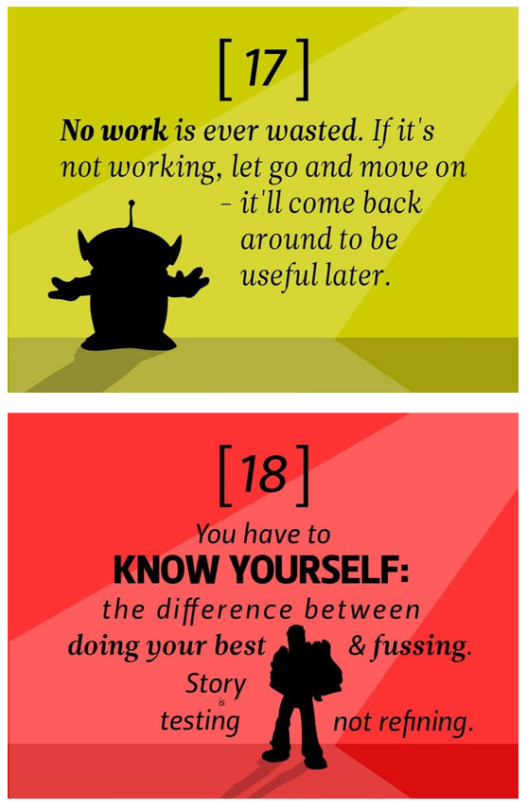
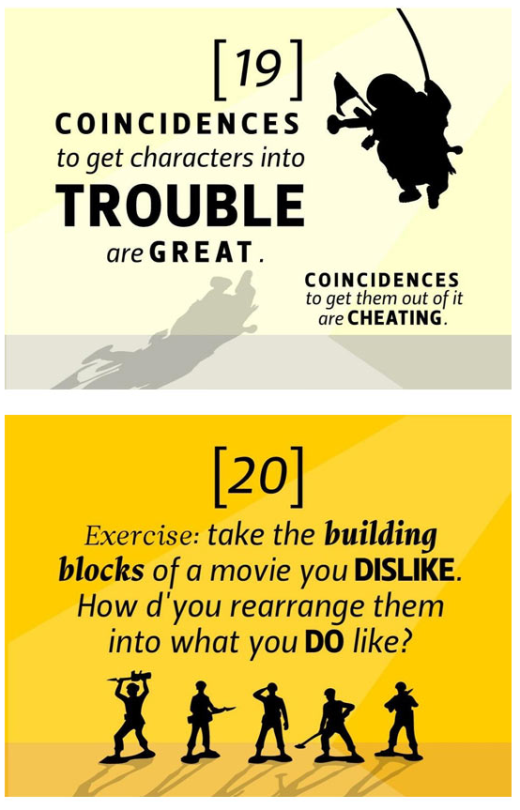
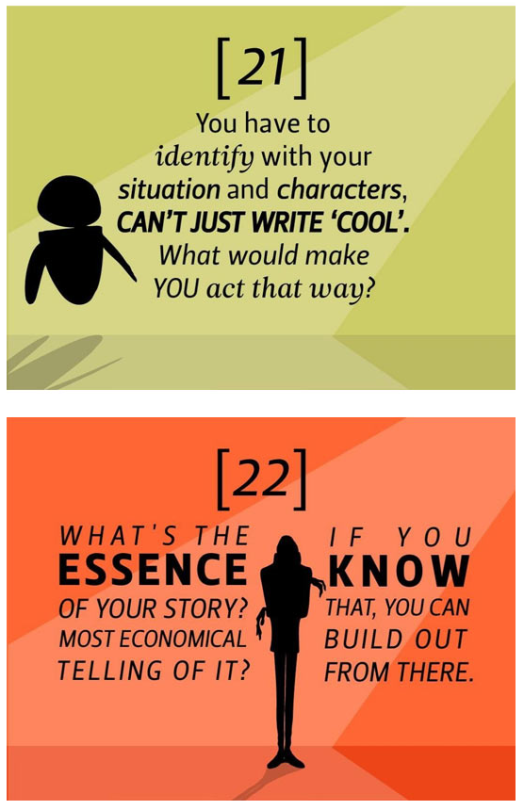
Don’t EVER say your writing is bad. It is not bad. It’s inexperienced. Everyone is inexperienced when they first start. You think J.K. Rowling, Stephen King, George R.R. Martin, Leigh Bardugo, Ransom Riggs, Rick Riordan, Adam Silvera, Maggie Stiefvater, Oliver Wilde and other great writers were just poked in the ass with God’s dick and He came on them with ‘Talent Cum’? No. They DEVELOPED that talent by working on it so they can improve . Wanna know why they improved?
They. Kept. Writing.
They beat those keyboards like they owned them (the authors) money. And as they kept writing, they gained something only hard work can gain: Experience. That, my friend, is how you become good at something. Or, if you like, you can say experienced or confident. All in all, your writing is not bad. It’s an opportunity . An opportunity that can help you learn and grow. Grow to be the next big deal, baby!
That beign said, work. Own that keyboard, honey! Own those characters, own that plot, just fucking own it.
When I first started writing my Game of Thrones story, I thought absolutely no one will read it. I have a rare pairing in it, and I first thought not many people would be interested. But I just kept writing anyway. I currently have 3369 people who read my story. And now, when I look back at my work, I can see how far I’ve came as a writer. my reading, my writing exercises, and my extra English classes have payed off. My hard work payed off. Why? I.Kept. Writing.
Wanna know what to do now?
Go to your laptop, tablet, phone or writing device you have, open up your writing software, and write. It doesn’t matter what you write about. Just write. Work on your unfinished works, work on your finished works, work on new works, on old works, just work.
The devil works hard but you gotta work harder.
And just keep working until your work is something that you would want to read. That’s what I do. Own that keyboard, honey. Own those characters, own that plot, just fucking own it. Keep writing and you’ll become the author you dream to be.
Just. Keep. Writing.
Good luck, you marvelous ballsack. Own that story, baby, own it!


 Dragon Blog