Hey. You there. Aspiring author. Keep writing. The world needs your words. Every single author – big and small, indie and trad, young and old – once stood where you stand, wondering if they were kidding themselves. Keep going. You got this.
because I see this everywhere and most people don’t know about it. The hyphen(-), the en-dash(–) and the em-dash(—) are three completely different things with completely different uses. If you write fanfiction, it’s likely that your readers won’t care, but if you want to submit a manuscript for publishing, you need to know the difference.
The hyphen (-) is the basic symbol you find on your keyboard, and it’s meant to only be used for hyphenated words (well-being, two-thirds).
The en-dash (–) is a slightly longer dash. It’s usually the width of an uppercase N, hence the name. You can find it by looking through the ‘insert symbol’ option in MS word or many word processors, and it is meant to be used to show a particular distance, or for intervals (May–August, 1900–1916, pages 12–22)
The em-dash
(—)
is what people most commonly use, but they refer to it as a hyphen. It’s the longest dash, about the size of an uppercase letter M, and you can either find it through the list of symbols in your word processor, or some word processors actually automatically transform two hyphens (–) into an em-dash
(—). It is meant to be used as a break in the sentence, in a place where a comma, semicolon or colon would normally be used or as a break in dialogue. (Her niece—the daughter of her oldest sister—is the one over there.)
*All three types of dashes are normally meant to be used without any spaces on either side of the dash.
No problem! And sorry about not answering sooner, I was on vacation. To make it up to you, I’ve made one of my trademark Long Posts about it.
TIPS ON HOW TO WRITE PAIN (FOR BOTH ORIGINAL CONTENT WRITERS AND FANFICTION WRITERS)
When I first started writing, about eight years ago, I had the same issue as @imjustafuckinggirl.
How are you supposed to write about pain you’ve never experienced before???
The characters in my book suffer through all sorts of terrible shit, and in no way am I writing from experience, which is marginally easier to do than write about something that has never happened to you.
However, with time, I managed to gather up a few strategies on how to write pain.
1. Don’t Write Paragraphs About It
I know, it’s tempting. You want to convey to the reader just how much pain the character is in, and you think that the pain will be emphasized the more you write about it.
This, however, is a lie.
As a reader, when I’m reading a book or fanfiction where, whenever the writer uses agonizingly long paragraphs to describe when a character is hurt, I skip it.
Entirely.
It’s boring and, quite frankly, unnecessary, especially during a fight or huge battle, which are supposed to be fast-paced.
When it comes to writing about pain, it really is about quality and not quantity.
In my own writing, I stick to short, quick paragraphs, some of them which are barely a line long. This gives it a faster pace and sort of parallels with the scattered, spread out thoughts of the character as they suffer.
2. Describe it Right
Many times, usually in fanfiction, writers over-exaggerate certain injuries.
This partially has to do with the fact that they’ve never experienced that injury before and are just thinking about what it might feel like.
As a girl with two brothers and who often participated in rough play-fights, I can assure you that getting punched is not as painful as you think it is.
(However, it does depend on the area, as well as how hard the punch is, on top of the fact that you have to take into account whether or not the punch broke bones)
I’m reading a high school AU where a character gets punched by a bully (Idk where they got punched it wasn’t stated) and the author is describing it like they’d been shot.
It was to the point where I was like Did the bully have brass knuckles or something????
It was very clear that this author had never been punched before.
When describing the pain of an injury or the injury itself, you have to take into account:
– What object was used to harm the character
– Where the injury is
– How long the character has had the injury
– (For blades) How deep the cut is
– (For blunt force trauma) How hard the hit was
– Whether or not the wound triggers other things (Ex: Concussion, vomiting, dizziness, infection, internal/external bleeding).
There’s also the fact that when some authors described wounds caused by blades such as knives, daggers, and swords, they never take into account the anatomy of a person and which places cause the most blood flow.
Obviously, a cut on your cheek will have less of a blood flow than a cut on your wrist, depending on what the blade hits, and I hope that everyone consults a diagram of veins, capillaries, arteries, etc. when they’re describing blood flow from a certain place.
There’s also the fact that you have to take into account where the blood is coming from. Veins? Arteries?
The blood from arteries will be a brighter red, like vermilion, than the blood from veins, which is the dark crimson everyone likes to talk about.
Not all places gush bright red blood, people!
3. DIFFERENT INJURIES HAVE DIFFERENT KINDS OF PAIN
Here, let me explain.
A punch feels different from a slap.
A broken arm feels different from getting stabbed.
A fall feels different from a dog bite.
I’ll give you a list of all the kinds of things that can be described for the three most common kinds of injuries that happen in stories:
Punch/Blunt Force Trauma
How it feels:
– Aching
– Numbness (In the later stages)
– A single spike of pain before it fades into an ache
– Throbbing
Effects:
– Vomiting (If the character is punched in the gut)
– Swelling
– Bruising
– Broken bones
– Unconsciousness (Blow to the head)
– Dizziness (Blow to the head)
– Concussion (Also a blow to the head)
– Internal bleeding
– Death (In the case of concussions and internal bleeding and broken bones- ribs can pierce lungs)
Stab Wound/Cut
How it feels:
– Stinging (only shallow wounds have just stinging)
– Burning
– With stab wounds, I feel like describing the effects of it make it more powerfully felt by the reader
Effects:
– Bleeding (Consult chart of the circulatory system beforehand for the amount of blood flow that should be described and what color the blood should be)
– Dizziness (Heavy blood loss)
– Unconsciousness
– Infection (if left unattended)
– Death
Gunshot
How it feels:
– Depends on the caliber bullet, from how far away they were shot (point-blank range is nothing like being shot from a distance), and in what place. Do careful research and then make your decision.
Effects:
– Bleeding
(Consult chart of the circulatory system beforehand for the amount of
blood flow that should be described and what color the blood should be. Also take into effect the above variables for blood flow as well.)
– Dizziness (Heavy blood loss)
– Infection (if left unattended)
– Death
Some things that a character may do while they’re injured:
– Heavy/Harsh/Ragged breathing
– Panting
– Making noises of pain
gasping
grunting
hissing
groaning
whimpering
yelping (when the injury is inflicted)
screaming
shrieking
wailing
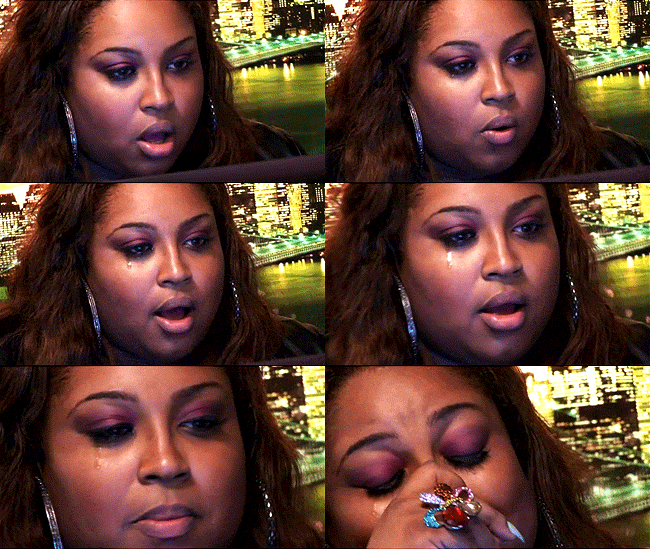
– Crying/ Weeping/Sobbing/Etc.
– Clenching their teeth
– Unable to speak
– Pressing their hands against a stab wound/cut to try and stem the bleeding
– Eyesight going out of whack (vision blurring and tilting, the room spinning, black spots consuming sight)
Hello! Are you a writer or artist looking for a place to get advice or share your stories? Then come on down to the Writers Nation discord server!!!
The rules are simple! No hate for anything written or drawn, discourse is to stay in its designated channel, and aphobia, transphobia, racism, truscum etc. etc. is not allowed!
I need to start planning out my stories before I write them so I don’t keep getting stuck with plot holes and dead ends, but the problem is I have no idea how to plan a story in a way that works for me. I was wondering if you guys would possibly help me by giving me how you plan out your stories so I can see how others do it and find a way that works for me.
Anyone who writes that I haven’t tagged is welcome to answer too, I’m really struggling with this and need all the help I can get!
hi!! hey!! hello!! spooks here to give a pal some advice on writing
i wanna start out with a disclaimer bc this is pretty important but please note that the way someone else plans a story may not necessarily work well for you. i’ve learned this especially over the years, as i’ve had to try out a variety of different planning styles before settling on the one i have now!
my planning process is usually complex and messy to most people, but i’ll try to condense it for the sake of being coherent. it mostly consists of this:
* setting
* characters
* plot outline
i’ll be explaining these sections separately because there are several ways i go about them, depending on the story. another note: planning is flexible, depending on what you’re writing. one structure may not work for one story but will fit for another and vice versa. a lot of this just depends on the situation, really.
with setting, i usually break it up with world-building and rules that will apply to the story itself. it’s helpful, especially in a fantasy setting (which is almost exclusively what i write), to have an idea as to what your world is like and how it works. this can range from the landscape, the people that live in the world, what civilization is like, what languages there are, if there are any religions, any significant landmarks that pertain to the story, etc. etc. and whereas most people say its better to plan literally everything there is that goes into world-building, i usually just stick to what’s relevant to the plot–but, if you don’t know what the plot is like, it helps to brainstorm some things that would apply to your world.
another thing ive started doing while planning the setting is making a map. depending on the book, this ranges from a small map to several big maps. though i draw out the geography and the like, i only mark up what is relevant to the story–because again, anything that doesn’t come up in the story isn’t a main focus.
getting a decent idea of what setting you’ll have helps you understand what your characters will be going through, where they will travel, what they believe in, what made them who they are, etc. etc. so planning your setting can be a huge help in constructing everything else about your story.
characters are a bit difficult for me to explain, because i plan characters in my head. i very rarely write down much when it comes to characters anymore, because i can keep things straight pretty well in my head. however, i can say that some essentials to plan when it comes to characters would be the following:
* personality
* their past
* their impact on the story/their role in the story
* relations with other characters (this one is more or less an additional place to plan, though, depending on the story)
i think these areas personally are the most important, as it helps make the character memorable. what kind of person are they? what are their flaws? what makes them distinct from the rest of the characters? do they have a minor or major role in the story? what is their impact on the story? answering these questions (and more; there’s always more when it comes to character building) will help fleshen out your characters and map out some basic points to hit on with the plot.
if you don’t have any clue what the plot will be like at this point in time, it may help to work extensively on the characters and see what you can make out of the facts you’ve laid out for them. for example, if you have a few characters that share an interest in, say, mythical creatures, then you can make a story that involves hunting down monsters or investigating the supernatural. knowing who your characters are and making sure they are realistic and relatable will strengthen your story and can help further along the plot.
finally, we have the plot outline. again, i break this section into parts, as breaking things up makes them less intimidating for me and more doable. i tend to break the plot outline into several parts:
* brainstorming
* rough draft general outline
* revised general outline
* chapter outlines
before i begin explaining these, i have to say that more often then not, this part of my writing process comes up constantly. unlike with characters and setting, which for the most part is untouched after initially being touched upon, the outline portion of my writing changes constantly, and is often revised the more i write in order to fit changes i’ve made in the story itself. anything is opt to change, making this part of my process extremely flexible, and was actually a big reason why i didn’t plan my stories until about a year or two ago. it was too much of a hassle to keep revising my outlines a thousand times because things just didn’t line up with what i originally thought was going to happen.
brainstorming is exactly what it sounds like--writing down ideas and random thoughts on a story and putting it down on paper. there are plenty of exercises for this, but my favorite is just writing random words and making something (like a character trait or an event/action) out of those words. don’t be afraid to go nuts with this–have as much fun as you want and let your imagination run wild! sometimes that spawns the best ideas.
the rough draft for the general outline is a basic outline of my story. i usually summarize the story in a paragraph or two, and list some basic points that i know are going to happen or that are vital to the storyline. it’s really bare-bones (hahaha) but it helps me write a more in-depth outline later on.
for the sake of making sense, i’ll use an example: just make something up right here and there. i’ll be using suzie and mark, two random kids, for this, and a magical setting where monsters exist.
“suzie and mark are two 10 year olds who discover a magic egg that is believed to lead to unseen riches. as they both originate from poor families, they go on a quest to find these riches and bring them back home, and become heroes amongst their peers. however, their journey proves to be perilous, as their course is being closely followed by monsters, who will do anything in their path to thwart them. [Depending on how you want to take the story, they either fail or succeed in obtaining the riches]”
speaking of, the revised general outline has a pretty misleading name, as, again, this process undergoes a lot of revision as i write. but, it is a more in-depth outline for the story, and lists out event-by-event what is going to happen in the story. a basic, easy “revised” outline would look something like this:
* suzie and mark play in the playground. discover a magical egg under swingsets.
* S & M (i appreviate names often because i’m lazy) ask magic lady in town about the egg. learn that if they go into the forest the egg will lead them to riches.
* kids go to the forest and meet monster. monster has them solve a riddle before they can pass. (they either solve or do not solve the riddle)
depending on whether or not they are successful, suzie and mark either are eaten by the monster or proceed and gain riches that no normal ten year old is able to handle (they probably shouldn’t be able to handle them, either. remember–realistic and relatable). this is a very basic plot that i’ve used as an example, but you get the gist.
finally, we’ve reached chapter-by-chapter planning. this is where changes in the revised outline comes into play, as applying revised points of the plot to the chapters themselves can prove to be difficult, and you’ll need to tweak things so they work with the story. i tend to plan chapters as i reach them, which can also be attributed to how much my outlines change, though i’ve also found that planning beforehand causes changes anyways. the final product of your first rough draft (or even your final draft) may not even resemble your original plans.
what i do for this part of the process is i use parts of the planning in the general outline and expand them. i’ll keep drawing from the example of suzie and mark, considering it’s helpful for me to explain my point:
* suzie and mark play in playground (the original plot point)
** brought there by parents so parents could discuss business. not really paying attention to children
** suzie and mark bullied by other kids and forced to play on their own. decide to play hear swingset
** S notices egg in sand. S & M uncover egg and show to parents
** parents dismiss them and mumble about magic lady in town, giving the kids the idea to visit her
by doing this, i am able to picture how one event in the general planning leads to another. it makes things more fluid, and at times can help get you to understand the plot a little better.
that’s about it for my planning process!! of course, if you’re still stuck, i’d say it wouldn’t hurt to go back to the drawing board and see if you can move things around or change things so its either easier for you to write or so things make more sense. i’ve done this many times simply because i wanted to do something that i simply couldn’t pull off at the time, and it was complicating things more than you should.
you should also get other opinions!! ask people to read over your stuff, see if they have any ideas. if you hear what others think, then you can draw from that and go from there
i hope you found this helpful!! sorry it’s so long, but hey, my process is pretty long, so that’s how the explanation is going to be XD
2. Agonized: as if in pain or tormented 3. Alluring:
powerfully and mysteriously attractive or fascinating; seductive
4. Appealing: attractive, in the sense of encouraging goodwill and/or interest 5. Beatific:
bestowing bliss, blessings, happiness
6. Bilious:
spiteful; bad-tempered
7. Black:
gloomy, pessimistic, dismal
8. Bleak:
without hope or encouragement; depressing; dreary
9. Blinking: surprise, or lack of concern 10. Blissful: showing a state of happiness or divine contentment 11. Blithe: carefree, lighthearted, or heedlessly indifferent 12. Brooding:
showing unhappiness of thought or appears darkly menacing
13. Bug-eyed: frightened or surprised, having the eyes bulging
14. Chagrined: humiliated or disappointed 15. Cheeky:
impudent or irreverent, typically in an endearing or amusing way
16. Cheerless:
joyless, depressing
17. Choleric: hot-tempered, irate 18. Coy:
shyness or modesty that is intended to be alluring 19. Crestfallen:
dejected, dispirited, discouraged
20. Darkly:
vaguely threatening or menacing manner
21. Deadpan:
deliberately impassive or expressionless
22. Dejected: downcast, depressed, dispirited
23. Derisive:
expressing contempt or ridicule
24. Despondent:
showing profound hopelessness, discouragement, or gloom
25. Doleful:
expressing sorrow, mournful 26. Dour:
relentlessly severe, stern, or gloomy in manner or appearance
27. Downcast: low in spirit 28. Dreamy:
pleasant, peaceful, and relaxing
29. Ecstatic:
in a state of ecstasy, full of joy, rapturous:
30. Etched: a feeling clearly visible on someone’s face
31. Faint: cowardly, weak, or barely perceptible 32. Fixed:
set or intent upon something; steadily directed
33. Furtive:
suggestive of guilty nervousness
34. Gazing:
look intently, especially in admiration, surprise, or thought
35. Glancing:
to look quickly or briefly
36. Glaring:
having a fixed look of hostility, fierceness, or anger
37. Glazed:
a fixed, dazed, or lifeless expression
38. Gloomy:
filled with or showing gloom; sad, dejected, or melancholy.
39. Glowering:
sullen dislike, discontent, or anger 40. Glowing:
showing the radiance of health, excitement
41. Grim: very serious or gloomy
42. Grave:
something that is serious or doing something in a solemn manner
43. Haunted:
showing signs of mental anguish or torment
44. Hopeless: depressed by a lack of encouragement or optimism 45. Hostile: aggressively angry, intimidating, unfriendly 46. Hunted:
appearing worn or harassed as if one is being pursued.
In order to successfully write horror, you must first understand fear. Fortunately, fear is a universal experience, and likely something you have intimate first-hand knowledge of – the key is learning to harness your fears so they can be translated for the page.
First, recognize that different techniques and approaches will work better in different media. What works well in a horror movie may not translate well to a written story, and vice versa. Understanding your medium and your goals will help you work to the strengths of the medium and provide the most effective approach.
Second, remember that horror, perhaps more than any other genre, is at its core interactive. Even a linear story told through writing or visual cues invites participation from the reader: You need them to engage so that they will bring their own fears to the table. Simply seeing characters interact with frightening things isn’t enough; you need to invoke fear in the reader by inviting them to experience the things that you describe. That’s something I’ll delve into in greater detail in a later post, but for now, keep it in the back of your mind.
Two Main Types of Horror
There are two primary types of horror reactions you can create in a reader: Visceral horror, and cerebral horror.
Visceral horror is felt in the gut. It preys upon the lizard brain and taps into basic primal fears. Visceral emotions include disgust and shock. It is most effective in visual media, where a viewer sees images and responds to them before their brain has a chance to process them, but you can still invoke these feelings through the careful use of description. More on that in a minute.
Cerebral horror is felt in the brain. It’s the type of horror that you think about hours or days or years later, the kind of disturbing ideas that implant themselves in there and become more frightening the more you consider them. These are rooted in anxiety rather than the primal lizard brain. Cerebral horror includes fridge horror and dread. A tightly crafted story will beat a movie every time when it comes to cerebral horror, because written media is more intimate. Use that to your advantage.
The Emotions of Horror Stories
Let’s talk in a little more detail about the emotions that you should work to create in your reader when crafting a horror story. In order of most-difficult to most-natural for the written medium, try experimenting with:
Shock: Films and video games can fall back on the “jump scare,” a tactic wherein you rapidly break suspense with a sudden visual cue, almost always accompanied by a loud noise. If you need an example for some reason, turn to the nearest Five Nights At Freddy’s game.
Jump scares work by temporarily startling the viewer, short-circuiting their conscious brains and tapping directly into their oldest and most primal reflex. Newborns startle when they are exposed to too much sensory input – it’s literally their first line of defense. When you jerk, scream, or flail, you are tapping in to the newborn infant part of your brain.
Can you do a jump scare in a novel? Probably not. For one, there is no sound, and sound is extremely important to a successful jump scare. For another, reading involves conscious interaction with text; you can’t really bypass their thought processes enough to invoke a jump scare response (except for the occasionally really susceptible reader).
But you can still shock them, and that’s just as good.
Shock occurs when a reader is totally blind-sided by new information. They think they know what’s going on, but in reality, the truth is something unexpected (and perhaps far more sinister). They think a certain character is safe, only for them to be suddenly and brutally murdered. They think they’ve solved the puzzle, but the rabbit hole actually goes much deeper. I’ll talk about shock in greater length in another post, because it is so difficult to do well and requires a lot more attention.
Disgust: Gore and “splatterpunk” relies on the visceral response of disgust. We are naturally repulsed by certain things, and that too may be hardwired into our DNA (although it’s also partly based on nurture and cultural factors). But basically, disgust exists to keep us away from things that may hurt us, like diseased things.
Triggering disgust in your reader will mostly fall to writing effective descriptions. Word choice matters a lot when it comes to writing gore. Some words just feel gross (think “moist”), and some invoke really icky mental images. I’ll write a whole thing on tricks to writing gore at a future point, but for now a word of caution: Horror cannot rely on gross-out scenes alone. You might invoke a kind of sick fascination in the reader, but you won’t really scare them.
Dread: Suspense and dread are vital ingredients to horror in any medium. They work by drawing the reader into the story, enticing them to think ahead – but stripping away their certainty about what will happen. A really good story will alternate between shock and dread, building up tension before twisting the narrative in an unexpected direction.
I wrote a little bit about invoking dread here, and I’ll delve into the topic at greater length later. But for now, remember: Suspense lies in giving the reader the pieces to a puzzle, but withholding context. It forces the reader to think ahead, to try and make sense of what they’re seeing, and to imagine terrible conclusions. It encourages the reader to think “what if…?” or “something terrible is going to happen but when? how? what?”
This is something you can only do well if the reader is invested in the characters and truly cares about them. Fortunately, because writing is so intimate, it’s easier to delve into a character’s mind and forge a strong connection between them and the reader.
Fridge horror: Fridge horror is basically when something becomes creepier or more disturbing the longer you think about it. It’s when the implications of something are more horrifying than what you see on the surface. It’s the part of the story the reader takes with them, the part that makes them question their own beliefs or world-view or even reality.
It is a cerebral horror, and it’s the thing that written stories can really excel at. I will – you guessed it – write a whole post on the topic in the near future, but until then, realize that fridge horror relies in part on logic (”oh god, this means THAT!”) and part empathy (”can you imagine what it must be like….?”)
The best fridge horror moments will be pulled from your own personal experiences and fears. While anyone can tap into primal fears (the dark, the unknown, disgusting things), fridge horror is often deeply personal and oddly specific. It’s raising a question and leading the reader to think “Oh god, I never thought of that, but it is terrible.”
I’ve rambled on a long time now, and I have many things to come back to and explain in more detail – but for now, hopefully this gives you something to think about! Until next time, stay scared 🙂
If you like this type of content and would like to see more, please consider leaving a tip in my Tip Jar!
👎🏼 Very simple 👍🏼 Basic 👎🏼 Very shy 👍🏼 Timid 👎🏼 Very short 👍🏼 Brief 👎🏼 Very shiny 👍🏼 Gleaming 👎🏼 Very sharp 👍🏼 Keen 👎🏼 Very serious 👍🏼 Grave 👎🏼 Very scary 👍🏼 Chilling 👎🏼 Very scared 👍🏼 Petrified 👎🏼 Very sad 👍🏼 Sorrowful 👎🏼 Very rich 👍🏼 Wealthy 👎🏼 Very rainy 👍🏼 Pouring 👎🏼 Very quiet 👍🏼 Hushed 👎🏼 Very quick 👍🏼 Rapid 👎🏼 Very pretty 👍🏼 Beautiful 👎🏼 Very powerful 👍🏼 Compelling 👎🏼 Very poor 👍🏼 Destitute 👎🏼 Very perfect 👍🏼 Flawless 👎🏼 Very pale 👍🏼 Ashen 👎🏼 Very painful 👍🏼 Excruciating 👎🏼 Very open 👍🏼 Transparent 👎🏼 Very old-fashioned 👍🏼 Archaic 👎🏼 Very old 👍🏼 Ancient 👎🏼 Very often 👍🏼 Frequently 👎🏼 Very noisy 👍🏼Deafening
1. Write 500 words (or 30 minutes) every day. This tip can be awesome for making writing a ‘habit.’ I know that! Yet recently, usually at 12:00am, I end up thinking, “JUST ONE SENTENCE! PLEASE! ONE SENTENCE AND YOU CAN TICK THE ‘DAILY WRITING’ BOX!”
2. Make an outline. An outline ensures that every scene drives your story forwards. Man, my editing phase would be so much quicker if I could just follow this rule! But if you know the whole story… isn’t it a bit boring? I think the not knowing is what motivates me to write! (Please someone, find me a counter-argument!)
3. The best way to say something is often the simplest one. Artist!Aly: “But wouldn’t it sound so much more interesting/beautiful/rhythmic/revolutionary if I wrote it like… or maybe… or if I just remove these few words… nope, the simplest it is!”
4. Do not write and edit simultaneously. Finish writing first. Editing is a separate process. My inner perfectionist despises this rule. Oh yeah, it’s personal. Every time I finish a paragraph and avoid critiquing it, I feel an unnatural tension take over, and hear a small voice shout, “you’ll never be a writer!”
5. If your goal is to finish your novel, find a new goal. It leads to better mental health to think of writing as a journey, rather than a task to be completed. If you aim for the end goal, you will probably panic and catastrophise every obstacle. So I tell myself, “Aly, you don’t actually want to finish your novel. You only really want to write whatever you can reasonably achieve in the next 30 minutes.” Sigh. My life would be so peaceful if I managed to believe that shit.
 Dragon Blog