How do you write creepy stories
- Over describe things
- Under describe things
- Fingers, teeth, and eyes
- Short sentences in rapid succession build tension
- Single sentence paragraphs build dread
- Uncanny valley=things that aren’t normal almost getting it right
- Third person limited view
- Limited explanations
- Rot, mold, damage, age, static, flickering, especially in places it shouldn’t be
- Limited sights for your mc -blindness, darkness, fog, refuse
- Real consequences
- Being alone -the more people there are, the less scary it is
- Intimate knowledge, but only on one side
I don’t know I just write scary things but I don’t know what I’m doing.
Tag: reference
“This is your daily, friendly reminder to use commas instead of periods during the dialogue of your story,” she said with a smile.
“Unless you are following the dialogue with an action and not a dialogue tag.” He took a deep breath and sat back down after making the clarifying statement.
“However,” she added, shifting in her seat, “it’s appropriate to use a comma if there’s action in the middle of a sentence.”
“True.” She glanced at the others. “You can also end with a period if you include an action between two separate statements.”
Things I didn’t know
“And–” she waved a pen as though to underline her statement–“if you’re interrupting a sentence with an action, you need to type two hyphens to make an en-dash.”
You guys have no idea how many students in my advanced fiction workshop didn’t know any of this when writing their stories.
Reblog to save a life
I love how easy it can be to learn stuff like this through tumblr and not through school.
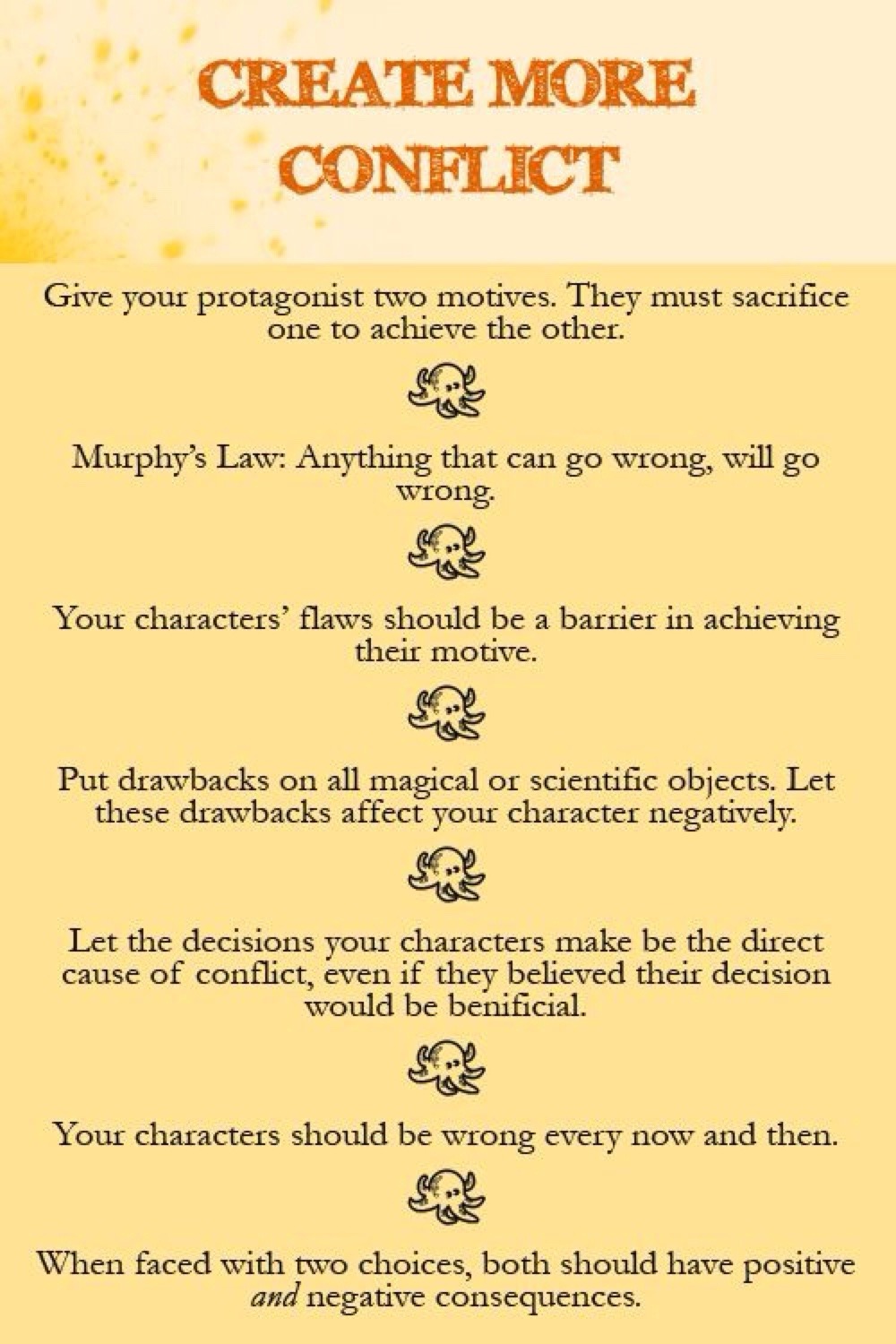
Thank you to whoever made this cute thing, very helpful. Here’s some advice to anyone who wants it!
Ambient sounds for writers
Find the right place to write your novel…
Nature
Places
Garden with pond and waterfall
Study room from victorian house with rain
Fictional places
Chloe’s room (Life is Strange)
Blackwell dorm (Life is Strange)
Two Whales Diner (Life is Strange)
Star Wars apartment (Star Wars)
Star Wars penthouse (Star Wars)
Tatooine (Star Wars)
Coruscant with rain (Star Wars)
Yoda’s hut with rain ( Star Wars)
Luke’s home (Star Wars)
Death Star hangar (Star wars)
Azkaban prison (Harry Potter)
Hogwarts library with rain (Harry Potter)
Ravenclaw common room (Harry Potter)
Hufflepuff common room (Harry Potter)
Slytherin common room (Harry Potter)
Gryffindor common room (Harry Potter)
Hagrid’s hut (Harry Potter)
Hobbit-hole house (The Hobbit)
Things
Transportation
Historical
Titanic first class dining room
Sci-fi
Futuristic apartment with typing
Post-apocalyptic
Horror
World
Trips, rides and walkings
The quickest show not tell tip ever.
‘Always show, not tell,’ is a big fat lie. If you always show, you’ll have half a novel of descriptive words and flowy sentences that will be hard to read.
Here is a quick tip:
Show emotion.
Tell feelings.
Don’t tell us ‘she was sad.’ Show us- ‘Her lip trembled, and her eyes burned as she tried to keep her tears at bay.’
Don’t show us ‘her eyelids were heavy- too heavy. Her limbs could barely function and she couldn’t stop yawning.’ Tell us – ‘she felt tired that morning.’
Showing emotion will bring the reader closer to the characters, to understand their reactions better. But I don’t need to read about how slow she was moving due to tiredness.
Likewise, when you do show, keep it to a max three sentences. Two paragraphs of ‘how she was sad,’ with no dialogue or inner thought is just as boring.
CHARACTER FACIAL EXPRESSIONS (WRITING REFERENCE)
EYES/BROWS
- his eyes widened
- her eyes went round
- her eyelids drooped
- his eyes narrowed
- his eyes lit up
- his eyes darted
- he squinted
- she blinked
- her eyes twinkled
- his eyes gleamed
- her eyes sparkled
- his eyes flashed
- his eyes glinted
- his eyes burned with…
- her eyes blazed with…
- her eyes sparked with…
- her eyes flickered with…
- _____ glowed in his eyes
- the corners of his eyes crinkled
- she rolled her eyes
- he looked heavenward
- she glanced up to the ceiling
- she winked
- tears filled her eyes
- his eyes welled up
- her eyes swam with tears
- his eyes flooded with tears
- her eyes were wet
- his eyes glistened
- tears shimmered in her eyes
- tears shone in his eyes
- her eyes were glossy
- he was fighting back tears
- tears ran down her cheeks
- his eyes closed
- she squeezed her eyes shut
- he shut his eyes
- his lashes fluttered
- she batted her lashes
- his brows knitted
- her forehead creased
- his forehead furrowed
- her forehead puckered
- a line appeared between her brows
- his brows drew together
- her brows snapped together
- his eyebrows rose
- she raised a brow
- he lifted an eyebrow
- his eyebrows waggled
- she gave him a once-over
- he sized her up
- her eyes bored into him
- she took in the sight of…
- he glared
- she peered
- he gazed
- she glanced
- he stared
- she scrutinized
- he studied
- she gaped
- he observed
- she surveyed
- he gawked
- he leered
- his pupils (were) dilated
- her pupils were huge
- his pupils flared
NOSE
- her nose crinkled
- his nose wrinkled
- she sneered
- his nostrils flared
- she stuck her nose in the air
- he sniffed
- she sniffled
MOUTH
- she smiled
- he smirked
- she grinned
- he simpered
- she beamed
- her mouth curved into a smile
- the corners of his mouth turned up
- the corner of her mouth quirked up
- a corner of his mouth lifted
- his mouth twitched
- he gave a half-smile
- she gave a lopsided grin
- his mouth twisted
- he plastered a smile on his face
- she forced a smile
- he faked a smile
- her smile faded
- his smile slipped
- he pursed his lips
- she pouted
- his mouth snapped shut
- her mouth set in a hard line
- he pressed his lips together
- she bit her lip
- he drew his lower lip between his teeth
- she nibbled on her bottom lip
- he chewed on his bottom lip
- his jaw set
- her jaw clenched
- his jaw tightened
- a muscle in her jaw twitched
- he ground his jaw
- he snarled/his lips drew back in a snarl
- her mouth fell open
- his jaw dropped
- her jaw went slack
- he gritted his teeth
- she gnashed her teeth
- her lower lip trembled
- his lower lip quivered
SKIN
- she paled
- he blanched
- she went white
- the color drained out of his face
- his face reddened
- her cheeks turned pink
- his face flushed
- she blushed
- he turned red
- she turned scarlet
- he turned crimson
- a flush crept up her face
WHOLE FACE, ETC.
- he screwed up his face
- she scrunched up her face
- he grimaced
- she winced
- she gave him a dirty look
- he frowned
- she scowled
- he glowered
- her whole face lit up
- she brightened
- his face went blank
- her face contorted
- his face twisted
- her expression closed up
- his expression dulled
- her expression hardened
- she went poker-faced
- a vein popped out in his neck
- awe transformed his face
- fear crossed her face
- sadness clouded his features
- terror overtook his face
- recognition dawned on her face
T h i s h e l p s s o m u c h t h a n k y o u
Words to replace said, except this actually helps
I got pretty fed up with looking for words to replace said because they weren’t sorted in a way I could easily use/find them for the right time. So I did some myself.
IN RESPONSE TO
Acknowledged
Answered
ProtestedINPUT/JOIN CONVERSATION/ASK
Added
Implored
Inquired
Insisted
Proposed
Queried
Questioned
Recommended
TestifiedGUILTY/RELUCTANCE/SORRY
Admitted
Apologized
Conceded
Confessed
ProfessedFOR SOMEONE ELSE
Advised
Criticized
SuggestedJUST CHECKING
Affirmed
Agreed
Alleged
ConfirmedLOUD
Announced
Chanted
CrowedLEWD/CUTE/SECRET SPY FEEL
Appealed
Disclosed
MoanedANGRY FUCK OFF MATE WANNA FIGHT
Argued
Barked
Challenged
Cursed
Fumed
Growled
Hissed
Roared
SworeSMARTASS
Articulated
Asserted
Assured
Avowed
Claimed
Commanded
Cross-examined
Demanded
Digressed
Directed
Foretold
Instructed
Interrupted
Predicted
Proclaimed
Quoted
TheorizedASSHOLE
Bellowed
Boasted
BraggedNERVOUS TRAINWRECK
Babbled
Bawled
Mumbled
Sputtered
Stammered
StutteredSUAVE MOTHERFUCKER
Bargained
Divulged
Disclosed
ExhortedFIRST OFF
BeganLASTLY
Concluded
ConcurredWEAK PUSY
Begged
Blurted
Complained
Cried
Faltered
FrettedHAPPY/LOL
Cajoled
Exclaimed
Gushed
Jested
Joked
LaughedWEIRDLY HAPPY/EXCITED
Extolled
Jabbered
RavedBRUH, CHILL
Cautioned
WarnedACTUALLY, YOU’RE WRONG
Chided
Contended
Corrected
Countered
Debated
Elaborated
Objected
Ranted
RetortedCHILL SAVAGE
Commented
Continued
Observed
SurmisedLISTEN BUDDY
Enunciated
Explained
Elaborated
Hinted
Implied
Lectured
Reiterated
Recited
Reminded
StressedBRUH I NEED U AND U NEED ME
Confided
Offered
UrgedFINE
Consented
DecidedTOO EMO FULL OF EMOTIONS
Croaked
Lamented
Pledged
Sobbed
Sympathized
Wailed
WhimperedJUST SAYING
Declared
Decreed
Mentioned
Noted
Pointed out
Postulated
Speculated
Stated
Told
VouchedWASN’T ME
Denied
LiedEVIL SMARTASS
Dictated
Equivocated
Ordered
Reprimanded
ThreatenedBORED
Droned
SighedSHHHH IT’S QUIET TIME
Echoed
Mumbled
Murmured
Muttered
Uttered
WhisperedDRAMA QUEEN
Exaggerated
Panted
Pleaded
Prayed
PreachedOH SHIT
Gasped
Marveled
Screamed
Screeched
Shouted
Shrieked
Yelped
YelledANNOYED
Grumbled
Grunted
Jeered
Quipped
Scolded
Snapped
Snarled
SneeredANNOYING
NaggedI DON’T REALLY CARE BUT WHATEVER
Guessed
VenturedI’M DRUNK OR JUST BEING WEIRDLY EXPRESSIVE FOR A POINT/SARCASM
Hooted
Howled
YowledI WONDER
Pondered
Voiced
WonderedOH, YEAH, WHOOPS
Recalled
Recited
RememberedSURPRISE BITCH
RevealedIT SEEMS FAKE BUT OKAY/HA ACTUALLY FUNNY BUT I DON’T WANT TO LAUGH OUT LOUD
Scoffed
Snickered
SnortedBITCHY
Tattled
Taunted
Teasedreblog to save a writer
Reblog because the titles for each category are comedy gold.
Writing x Characters When You Aren’t x, A Masterlist
x: a variable used to represent something unknown.
We’ve seen an influx of questions about how to write stories based around characters of color, disability, non-binary, etc. when the author does not fall into these categories. Rather than have these posts take over the site, we’ve decided to compile a list of resources to help our fellow writers become more educated about writing what they do not immediately know. However, this list is not the end-all-be-all of knowledge; one should always try to learn from someone with first hand experience in any topic. The world is constantly growing and changing, and because of that, there will always be more to learn. The admins at Plotline Hotline want to help writers form respectful, informed, and realistic characters that broaden the narrow range we see in literature today.
*Be wary that some of the topics listed below contain sensitive material. Reader discretion is advised.*
As always, the links I found to be especially apt will be in bold. Topics are listed alphabetically, excepting the “other” section.
Culture
Appropriate Cultural Appropriation
What is Cultural Appropriation? [1,2,3]
Cultural Appropriation Is, In Fact, Indefensible
Voice Appropriation & Writing About Other Cultures
Diversity, Appropriation, and Writing the Other
[List]Disability
Writing Disibilities [1,2,3,4,5]
Guides to Writing Deaf or Hard of Hearding People
National Association of the Deaf – Resources [List]
Prostehtic Limbs (Character Guide)
How NOT to Write Disabled Characters
A Guide to Disibility Rights Law (United States)
Timeline of Disibility Rights in the United States
Social Security Disability: List of Impairments, Medical Conditions, and Problems [List] (United States)
How to Write Disabled Characters: An Opinion Piece
Artificial Eye Resources [List][Various]
Adapting to the Loss of an Eye
Misconceptions and Myths About Blindness
Blind Characters: A Process of Awareness
Writing Blind Characters [List]
Types of Learning Disabilities [List]
Diversity
A Guide to Spotting and Growing Past Stereotypes
How to Prepare to Write a Diverse Book
Why Diversity Matters for Everyone
Writing a Driverse Book [1,2,3,4,5]
Diversity, Political Correctness and The Power of Language
Diversity Book List [List][Books]
Basic Tips To Write Subcultures & Minority Religions Better
Gender
GLAAD Media Reference Guide – Transgender
Creating Well-Written Trans Characters
A Few Things Writers Need To Know About Sexuality & Gender Expression
Trans (Character Guide & Bio Building)
A Non-Binary Person’s Guide to Invented Pronouns
Keeping a Trans* Person a Person
Suggestions for Reducing Gendered Terms in Language [Photo]
How to Review a Trans Book as a Cis Person
Writing Characters of Different Genders [List]
Gender Spectrum Resources [List]
Illness
The Spoon Theory – Also pertains to disibility
Sexually Transmitted Diseases [List]
Sexually Transmitted Infections
Sex and Gender Differences in Health [Study]
All Chronic Illness Topics [List]
A Day in the Life of a Home Health Aide/Health Coach
Fiction Books With Chronically Ill Main Characters- Not Cancer [List][Books]
Neurotype (Including Mental Health)
Writing an Autistic Character When You Don’t Have Autism
What to Consider When Writing Mental Illness
Stanford Psychiatric Patient Care
Inpatient Psychiatric Questions and Tips
Don’t Call Me Crazy [Documentary]
(Avoid) Romanticizing Mental Illness [1,2]
A Day in the Life of a Mental Hospital Patient
State-run vs. Private Mental Hospitals
Mental Hospital Non-Fiction [List][Books]
National Institute of Mental Health – Mental Health Information [List]
Remember, Remember: The Basics of Writing Amnesia
What is a Learning Disability?
Race
Writing Race: A Checklist for Authors
Transracial Writing for the Sincere
Is my character “black enough”
White Privilege: Unpacking the Invisible Knapsack
Challenge, Counter, Controvert: Subverting Expectations
Writing With Color: Blogs – Recs – Resources [List]
Writing People of Color (If you happen to be a person of another color)
7 Offensive Mistakes Well-Intentioned Writers Make
Description Guide – Words for Skin Tone
Religion
Religion in Novels: Terrific or Taboo?
How to Write a Fantasy Novel that Sells: The Religion
Writing About Faith And Religion
From Aladdin to Homeland: How Hollywood Can Reinforce Racial and Religious Stereotypes
Sexuality
Understanding Sexual Orientation and Gender Identity [List]
Writing Gay Characters [1,2,3]
American Civil Liberties Union – LGBT+ Rights
LGBT+ Rights by Country or Territory
LGBT+ Studies Web Sites [List]
Overview of Gay and Lesbian Parenting, Adoption and Foster Care (United States)
Other
How Doctors’ Offices—and Queer Culture—Are Failing Autistic LGBTQ People
Five Traps and Tips for Character Development
Developing Realistic Characters
I hope that this list will provide topics a writer may not initially think to research when writing. If there are any resources that you think would be fitting for this list, please let us know! We want to have as many helpful sources as possible to maximize learning opportunities.
Stay educated,
xx Sarah
Helpful things for action writers to remember
- Sticking a landing will royally fuck up your joints and possibly shatter your ankles, depending on how high you’re jumping/falling from. There’s a very good reason free-runners dive and roll.
- Hand-to-hand fights usually only last a matter of seconds, sometimes a few minutes. It’s exhausting work and unless you have a lot of training and history with hand-to-hand combat, you’re going to tire out really fast.
- Arrows are very effective and you can’t just yank them out without doing a lot of damage. Most of the time the head of the arrow will break off inside the body if you try pulling it out, and arrows are built to pierce deep. An arrow wound demands medical attention.
- Throwing your opponent across the room is really not all that smart. You’re giving them the chance to get up and run away. Unless you’re trying to put distance between you so you can shoot them or something, don’t throw them.
- Everyone has something called a “flinch response” when they fight. This is pretty much the brain’s way of telling you “get the fuck out of here or we’re gonna die.” Experienced fighters have trained to suppress this. Think about how long your character has been fighting. A character in a fist fight for the first time is going to take a few hits before their survival instinct kicks in and they start hitting back. A character in a fist fight for the eighth time that week is going to respond a little differently.
- ADRENALINE WORKS AGAINST YOU WHEN YOU FIGHT. THIS IS IMPORTANT. A lot of times people think that adrenaline will kick in and give you some badass fighting skills, but it’s actually the opposite. Adrenaline is what tires you out in a battle and it also affects the fighter’s efficacy – meaning it makes them shaky and inaccurate, and overall they lose about 60% of their fighting skill because their brain is focusing on not dying. Adrenaline keeps you alive, it doesn’t give you the skill to pull off a perfect roundhouse kick to the opponent’s face.
- Swords WILL bend or break if you hit something hard enough. They also dull easily and take a lot of maintenance. In reality, someone who fights with a sword would have to have to repair or replace it constantly.
- Fights get messy. There’s blood and sweat everywhere, and that will make it hard to hold your weapon or get a good grip on someone.
- A serious battle also smells horrible. There’s lots of sweat, but also the smell of urine and feces. After someone dies, their bowels and bladder empty. There might also be some questionable things on the ground which can be very psychologically traumatizing. Remember to think about all of the character’s senses when they’re in a fight. Everything WILL affect them in some way.
- If your sword is sharpened down to a fine edge, the rest of the blade can’t go through the cut you make. You’ll just end up putting a tiny, shallow scratch in the surface of whatever you strike, and you could probably break your sword.
- ARCHERS ARE STRONG TOO. Have you ever drawn a bow? It takes a lot of strength, especially when you’re shooting a bow with a higher draw weight. Draw weight basically means “the amount of force you have to use to pull this sucker back enough to fire it.” To give you an idea of how that works, here’s a helpful link to tell you about finding bow sizes and draw weights for your characters. (CLICK ME)
- If an archer has to use a bow they’re not used to, it will probably throw them off a little until they’ve done a few practice shots with it and figured out its draw weight and stability.
- People bleed. If they get punched in the face, they’ll probably get a bloody nose. If they get stabbed or cut somehow, they’ll bleed accordingly. And if they’ve been fighting for a while, they’ve got a LOT of blood rushing around to provide them with oxygen. They’re going to bleed a lot.
Hopefully this helps someone out there. If you reblog, feel free to add more tips for writers or correct anything I’ve gotten wrong here.
How to apply Writing techniques for action scenes:
– Short sentences. Choppy. One action, then another. When there’s a lull in the fight, take a moment, using longer phrases to analyze the situation–then dive back in. Snap, snap, snap.
– Same thing with words – short, simple, and strong in the thick of battle. Save the longer syllables for elsewhere.
– Characters do not dwell on things when they are in the heat of the moment. They will get punched in the face. Focus on actions, not thoughts.
– Go back and cut out as many adverbs as possible.
– No seriously, if there’s ever a time to use the strongest verbs in your vocabulary – Bellow, thrash, heave, shriek, snarl, splinter, bolt, hurtle, crumble, shatter, charge, raze – it’s now.
– Don’t forget your other senses. People might not even be sure what they saw during a fight, but they always know how they felt.
– Taste: Dry mouth, salt from sweat, copper tang from blood, etc
– Smell: OP nailed it
– Touch: Headache, sore muscles, tense muscles, exhaustion, blood pounding. Bruised knuckles/bowstring fingers. Injuries that ache and pulse, sting and flare white hot with pain.
– Pain will stay with a character. Even if it’s minor.
– Sound and sight might blur or sharpen depending on the character and their experience/exhaustion. Colors and quick movements will catch the eye. Loud sounds or noises from behind may serve as a fighter’s only alert before an attack.
– If something unexpected happens, shifting the character’s whole attention to that thing will shift the Audience’s attention, too.
– Aftermath. This is where the details resurface, the characters pick up things they cast aside during the fight, both literally and metaphorically. Fights are chaotic, fast paced, and self-centered. Characters know only their self, their goals, what’s in their way, and the quickest way around those threats. The aftermath is when people can regain their emotions, their relationships, their rationality/introspection, and anything else they couldn’t afford to think or feel while their lives were on the line.Do everything you can to keep the fight here and now. Maximize the physical, minimize the theoretical. Keep things immediate – no theories or what ifs.
If writing a strategist, who needs to think ahead, try this: keep strategy to before-and-after fights. Lay out plans in calm periods, try to guess what enemies are thinking or what they will do. During combat, however, the character should think about his options, enemies, and terrain in immediate terms; that is, in shapes and direction.
(Large enemy rushing me; dive left, circle around / Scaffolding on fire, pool below me / two foes helping each other, separate them.)Lastly, after writing, read it aloud. Anyplace your tongue catches up on a fast moving scene, edit. Smooth action scenes rarely come on the first try.
More for martial arts or hand-to-hand in general
What a character’s wearing will affect how they fight. The more restricting the clothes, the harder it will be. If they’re wearing a skirt that is loose enough to fight in, modesty will be lost in a life or death situation.
Jewelry can also be very bad. Necklaces can be grabbed onto. Bracelets also can be grabbed onto or inhibit movement. Rings it can depend on the person.
Shoes also matter. Tennis shoes are good and solid, but if you’re unused to them there’s a chance of accidentally hurting your ankle. High heels can definitely be a problem. However, they can also make very good weapons, especially for someone used to balancing on the balls of their feet. Side kicks and thrusting kicks in soft areas (like the solar plexus) or the feet are good ideas. They can also (hopefully) be taken off quickly and used as a hand weapon. Combat boots are great but if someone relies more on speed or aren’t used to them, they can weigh a person down. Cowboy boots can be surprisingly good. Spin kicks (if a character is quick enough to use them) are especially nasty in these shoes.
If a character is going to fight barefoot, please keep location in mind. Concrete can mess up your feet quick. Lawns, yards, etc often have hidden holes and other obstacles that can mess up a fighter. Tile floors or waxed wood can be very slippery if you’re not careful or used to them.
Likewise, if it’s outside be aware of how weather will affect the fight. The sun’s glare can really impede a fighter’s sight. A wet location, inside or outside, can cause a fighter to slip and fall. Sweat on the body can cause a fighter to lose a grip on an opponent too.
Pressure points for a trained fighter are great places to aim for in a fight. The solar plexus is another great place to aim for. It will knock the wind out of anyone and immediately weaken your opponent.
It your character is hit in the solar plexus and isn’t trained, they’re going down. The first time you get hit there you are out of breath and most people double over in confusion and pain. If a fighter is more used to it, they will stand tall and expand themselves in order to get some breath. They will likely keep fighting, but until their breath returns to normal, they will be considerably weaker.
Do not be afraid to have your character use obstacles in their environment. Pillars, boxes, bookshelves, doors, etc. They put distance between you and an opponent which can allow you to catch your breath.
Do not be afraid to have your character use objects in their environment. Someone’s coming at you with a spear, trident, etc, then pick up a chair and get it caught in the legs or use it as a shield. Bedsheets can make a good distraction and tangle someone up. Someone’s invading your home and you need to defend yourself? Throw a lamp. Anything can be turned into a weapon.
Guns often miss their targets at longer distances, even by those who have trained heavily with them. They can also be easier to disarm as they only shoot in one direction. However, depending on the type, grabbing onto the top is a very very bad idea. There is a good likelihood you WILL get hurt.
Knives are nasty weapons by someone who knows what they’re doing. Good fighters never hold a knife the way you would when cutting food. It is best used when held against the forearm. In defense, this makes a block more effective and in offense, slashing movement from any direction are going to be bad. If a character is in a fight with a knife or trying to disarm one, they will get hurt.
Soft areas hit with hard body parts. Hard areas hit with soft body parts. The neck, stomach, and other soft areas are best hit with punches, side kicks, elbows, and other hard body parts. Head and other hard parts are best hit using a knife hand, palm strike, etc. Spin kicks will be nasty regardless of what you’re aiming for it they land.
Common misconception with round house kicks is that you’re hitting with the top of the foot. You’re hitting with the ball. You’re likely to break your foot when hitting with the top.
When punching, the thumb is outside of the fist. You’ll break something if you’re hitting with the thumb inside, which a lot of inexperienced fighters do.
Also, punching the face or jaw can hurt.
It can be hard to grab a punch if you’re not experienced with it despite how easy movies make it seem. It’s best to dodge or redirect it.
Hitting to the head is not always the best idea. It can take a bit of training to be able to reach for the head with a kick because of the height. Flexibility is very much needed. If there are problems with their hips or they just aren’t very flexible, kicks to the head aren’t happening.
Jump kicks are a good way to hit the head, but an opponent will see it coming if it’s too slow or they are fast/experienced.
A good kick can throw an opponent back or knock them to the ground. If the person you’ve hit has experience though, they’ll immediately be getting up again.
Even if they’ve trained for years in a martial art, if they haven’t actually hit anything before or gotten hit, it will be slightly stunning for the person. It does not feel the way you expect it too.
Those yells in martial arts are not just for show. If done right, they tighten your core making it easier to take a hit in that area. Also, they can be used to intimidate an opponent. Yelling or screaming right by their ear can startle someone. (Generally, KHR fans look at Squalo for yelling)
Biting can also be used if someone’s grabbing you. Spitting in someone’s eyes can’t hurt. Also, in a chokehold or if someone is trying to grab your neck in general, PUT YOU CHIN DOWN. This cuts off access and if they’re grabbing in the front can dig into their hand and hurt.
Wrist grabs and other grabs can be good. Especially if it’s the first move an opponent makes and the character is trained, there are simple ways to counter that will have a person on their knees in seconds..
Use what your character has to their advantage. If they’re smaller or have less mass, then they’ll be relying on speed, intelligence, evasion, and other similar tactics. Larger opponents will be able to take hits better, they’re hits may be slower depending on who it is but will hurt like hell if they land, and size can be intimidating. Taller people with longer legs will want to rely on kicking and keeping their distance since they have the advantage there. Shorter people will want to keep the distance closer where it’s easier for them but harder for a taller opponent. Punching is a good idea.
Using a person’s momentum against them is great. There’s martial arts that revolve around this whole concept. They throw a punch? Grab it and pull them forward and around. Their momentum will keep them going and knock them off balance.
Leverage can used in the same way. If used right, you can flip a person, dislocate a shoulder, throw out a knee, etc.
One note on adrenaline: All that was said above is true about it. But, in a fight, it can also make you more aware of what’s going on. A fight that lasts twenty seconds can feel like a minute because time seems to almost slow down while moving extremely rapidly. You only have so much time to think about what you’re doing. You’re taking in information constantly and trying to adjust. Even in the slow down adrenaline gives you, everything is moving very rapidly.
Feelings will be your downfall even more so than adrenaline. Adrenaline can make those feelings more intense, but a good fighter has learned not to listen to those feelings. A good fighter may feel anger at being knocked down or in some way humiliated – their pride taken down. Yet they will not act on the anger. Acting on it makes a fighter more instinctive and many will charge without thinking. Losing control of anything (adrenaline rush, emotions, technique, etc) can be a terrible thing in a fight.
Just thought I’d add in here.
YES. YES.
Such good writing tips!
@myebi@jmlascar you’ve probably seen this already, but in case you haven’t, it’s got some good info on fight scenes 🙂
Flashbacks, Part 1: Think Before You Write a Full-Scene Flashback
“Show, don’t tell”, right? Why tell the reader about a past event when I can literally take them there?
A full-scene flashback occurs when the story shows the past by giving it its own scene instead of integrating the information into the basic narrative.
While it can be beneficial for readers to see backstory in some circumstances, backstory is backstory for a reason and full-scene flashbacks aren’t needed as often as they can be used. They can be a fun way to introduce past information, and if used correctly are a great addition to a story, but not all information deserves the kind of attention that the narrative tool grants.
Full-scene flashbacks are not inherently bad, but it’s important to understand that they aren’t just fancy scenes to throw in to make something “better”. They have direct effects on a scene and story because they’re a narrative choice and not all stories benefit from the consequences that adding them can create.
“Show don’t tell” is definitely a strong guideline to follow, but part of bettering writing skills is learning when “showing” actually hurts your overall narrative. Poorly-used flashbacks are a quick way to burden your story, so it’s probably good to learn more about them.
(Note: This post does not cover “special circumstances”, like stories specifically built to parallel the past/present or characters who experience true traumatic flashbacks. This is about how full-scene flashbacks can affect a general story.)
 Dragon Blog